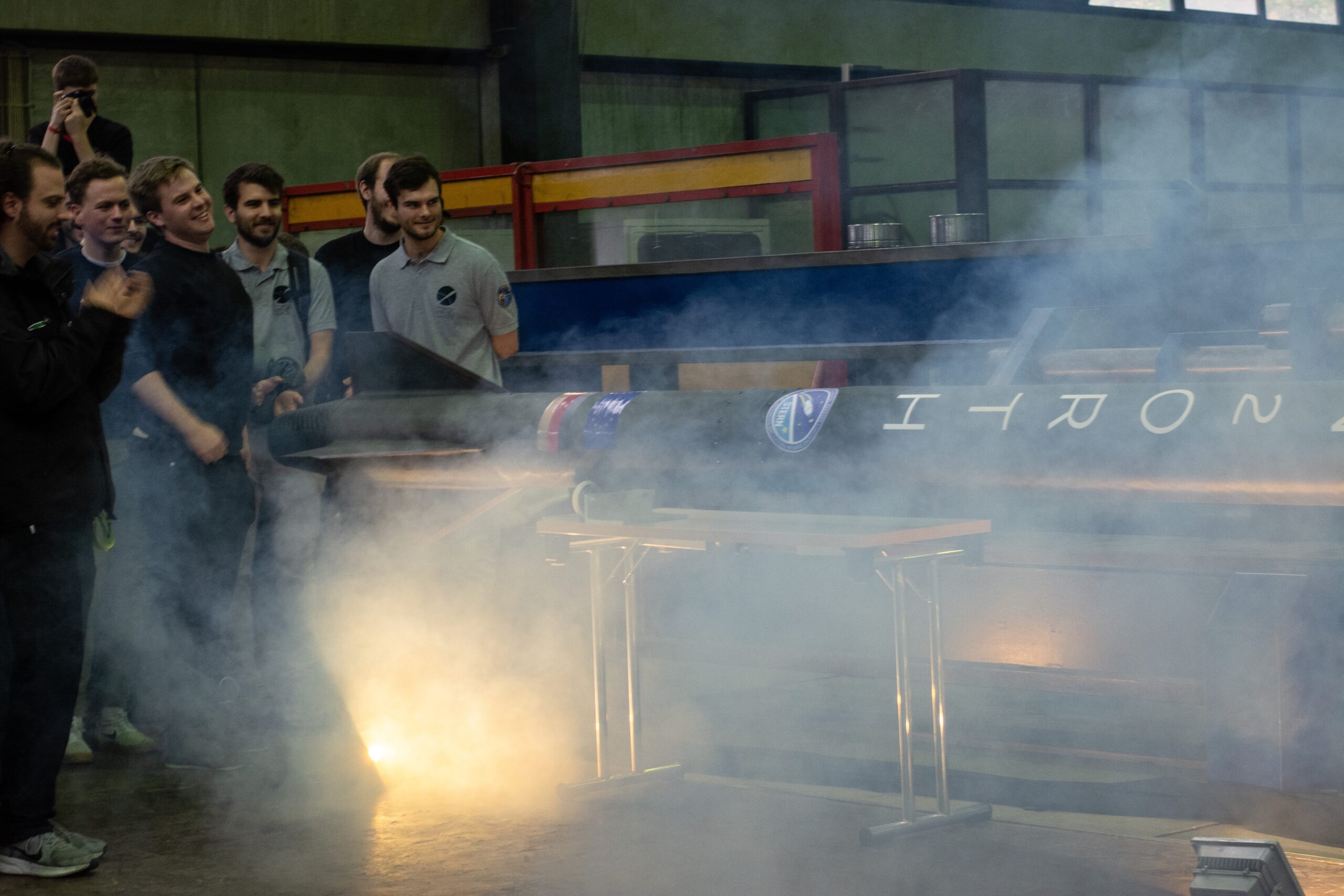
N₂ORTH Rocket Unveiled for the First Time

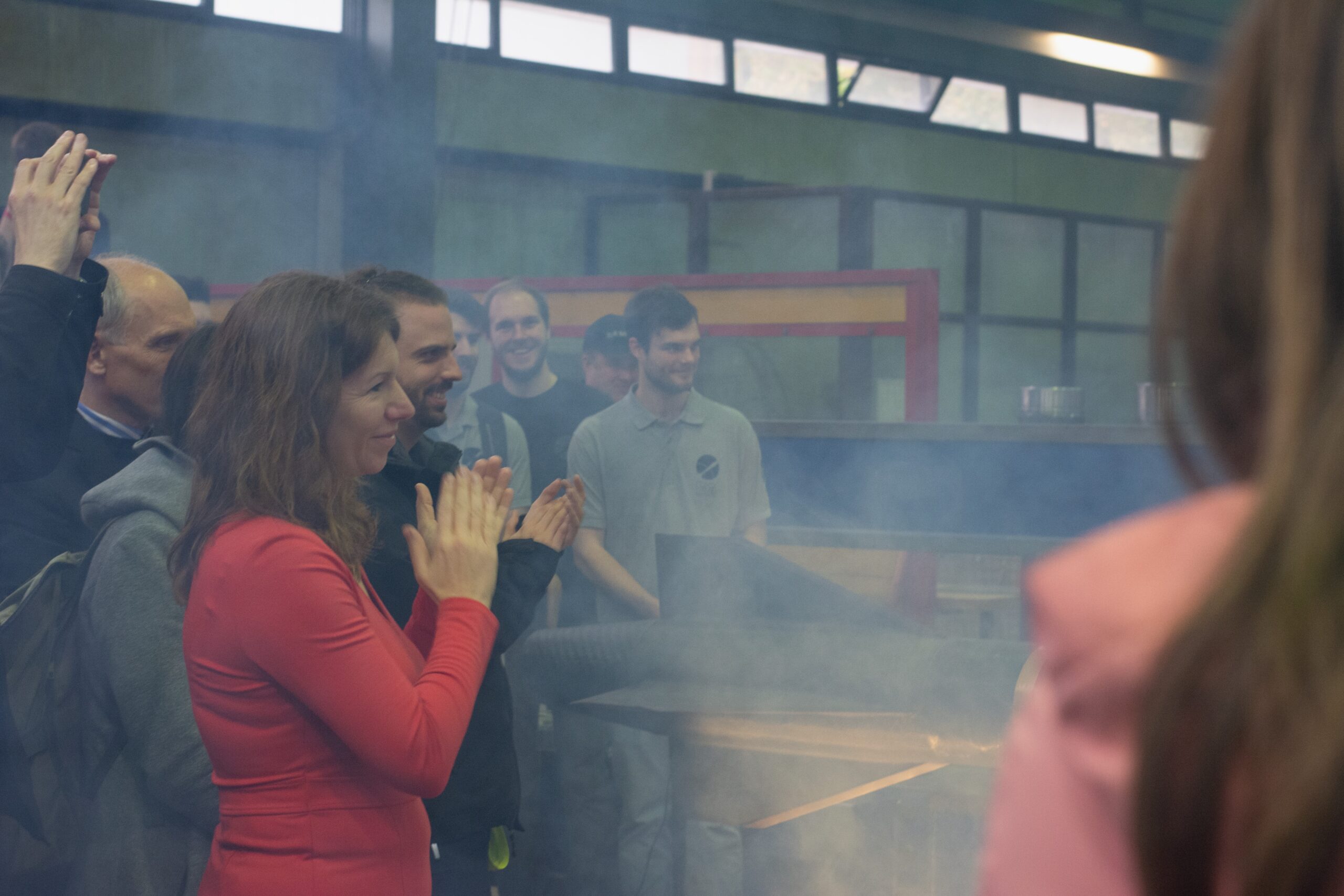
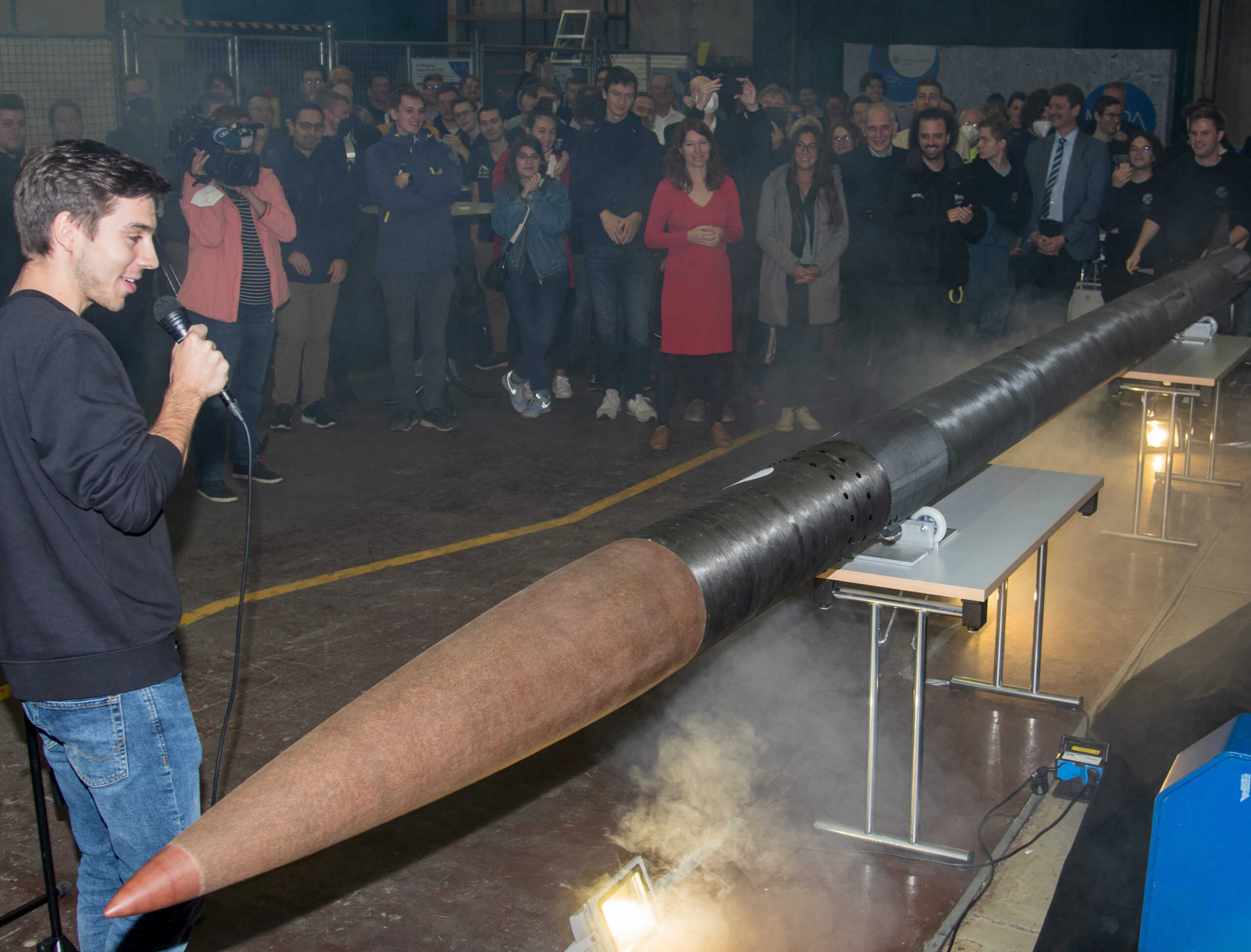
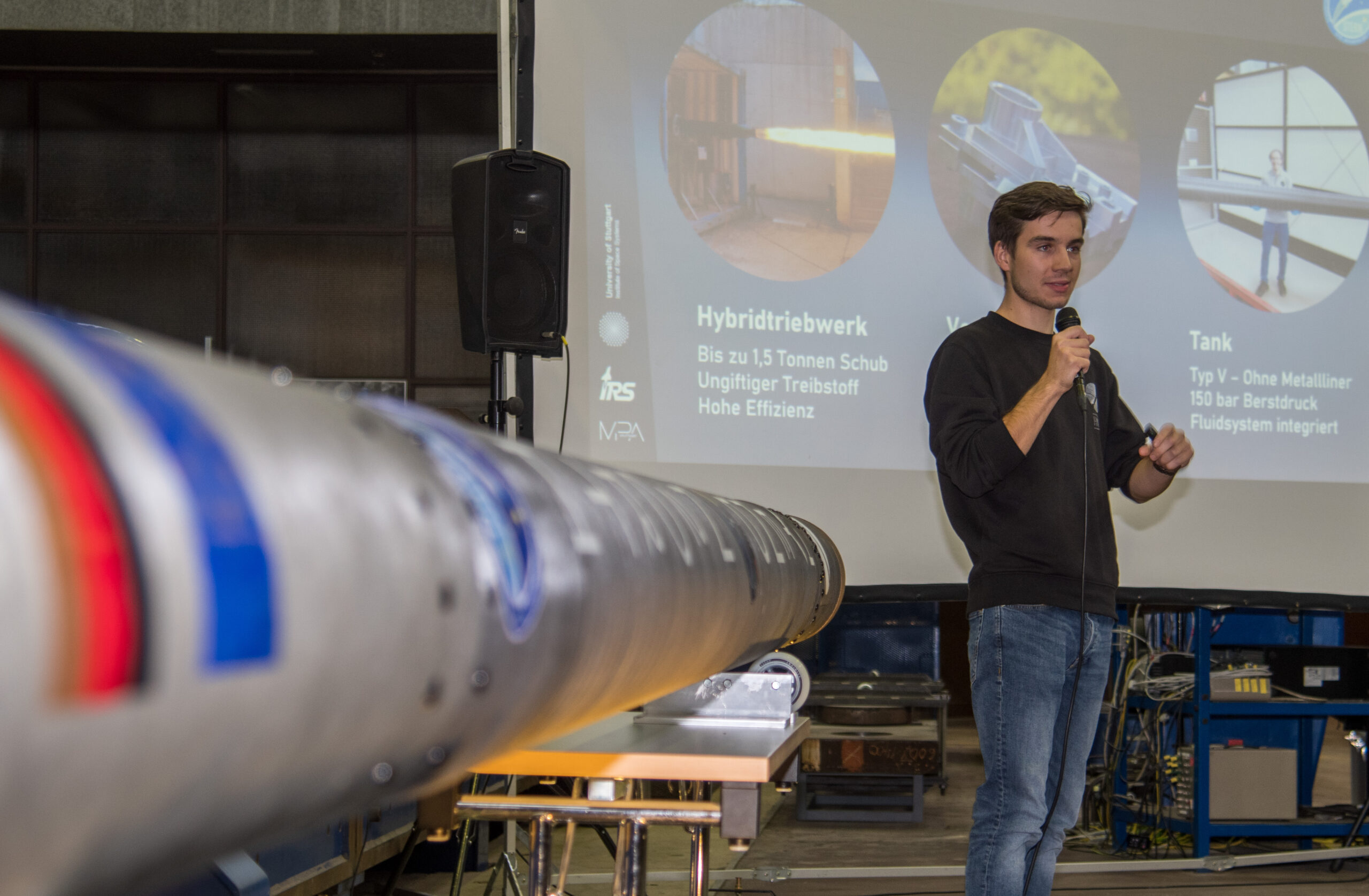
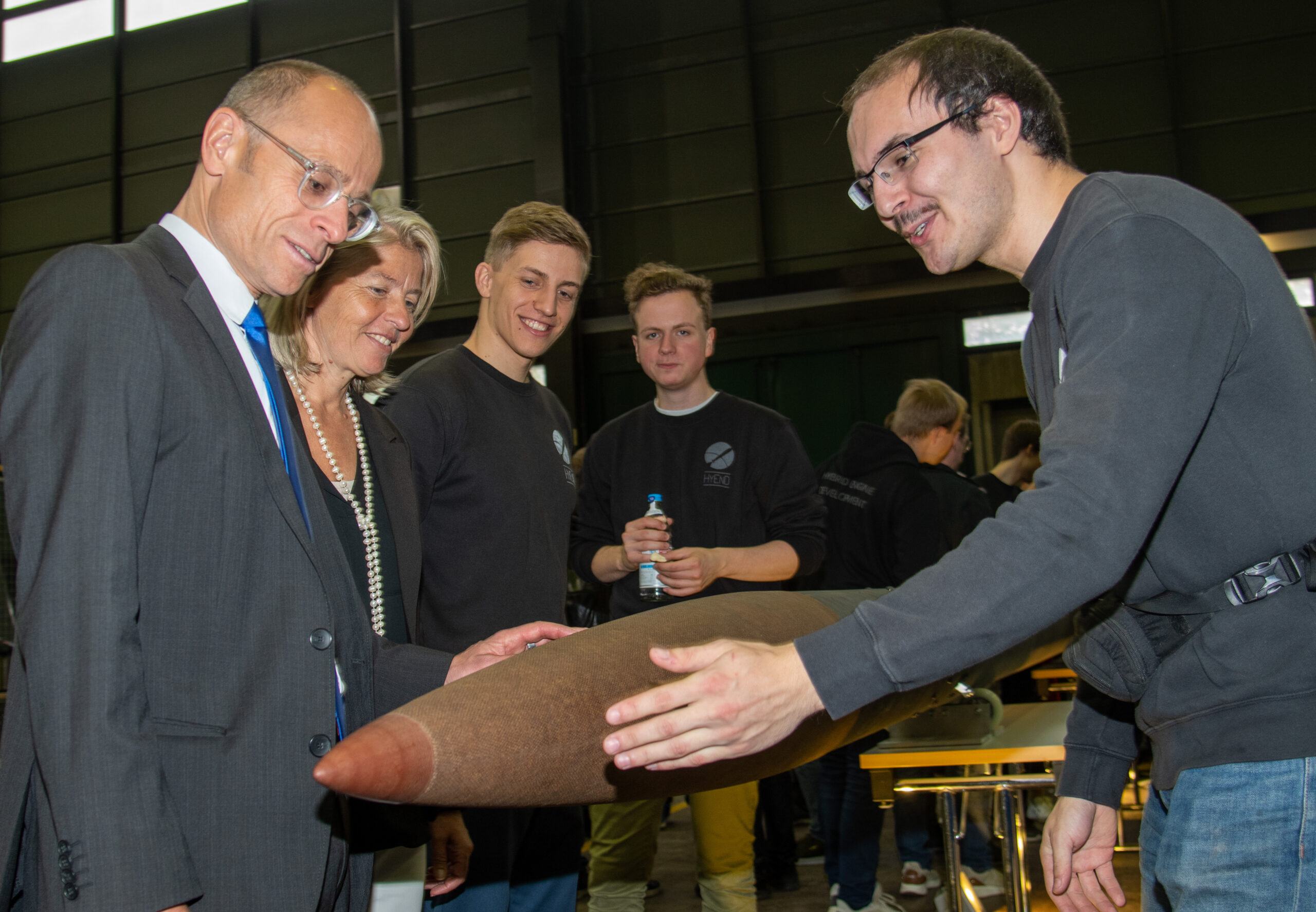
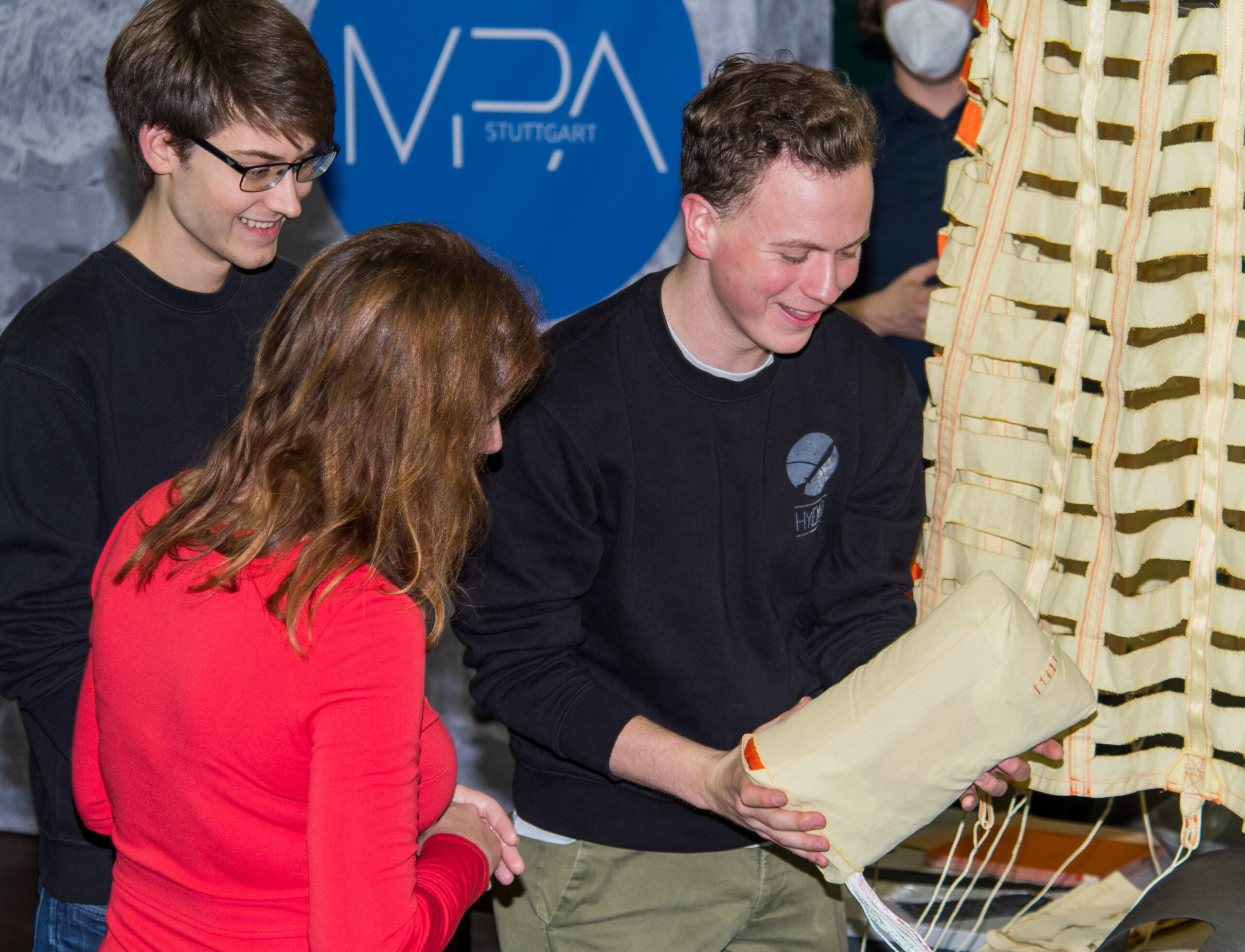
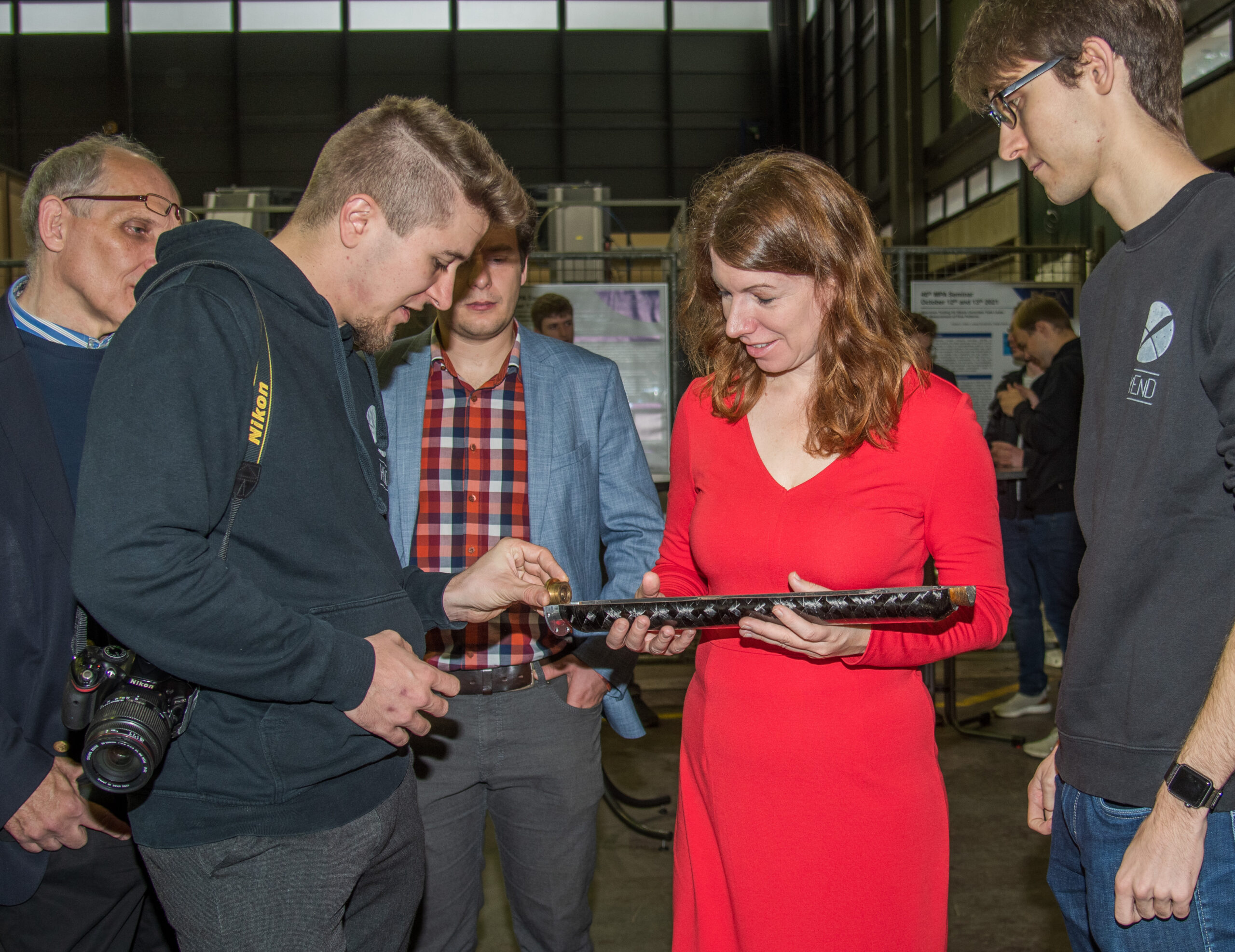
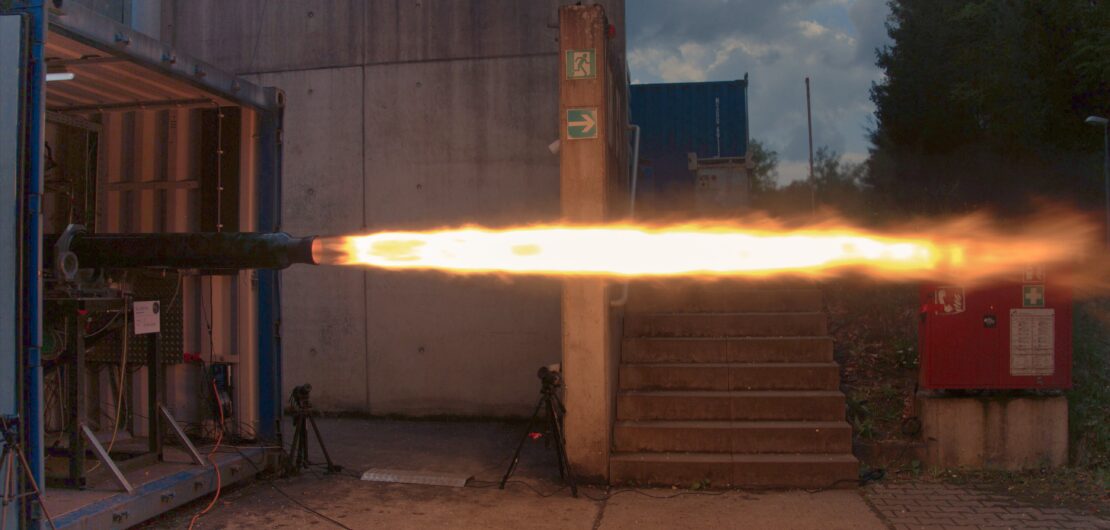
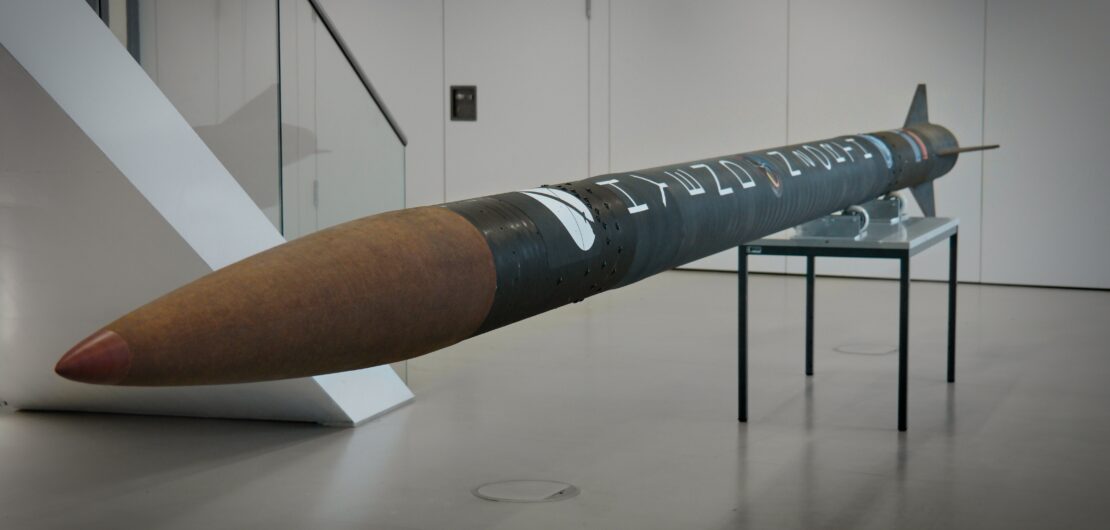
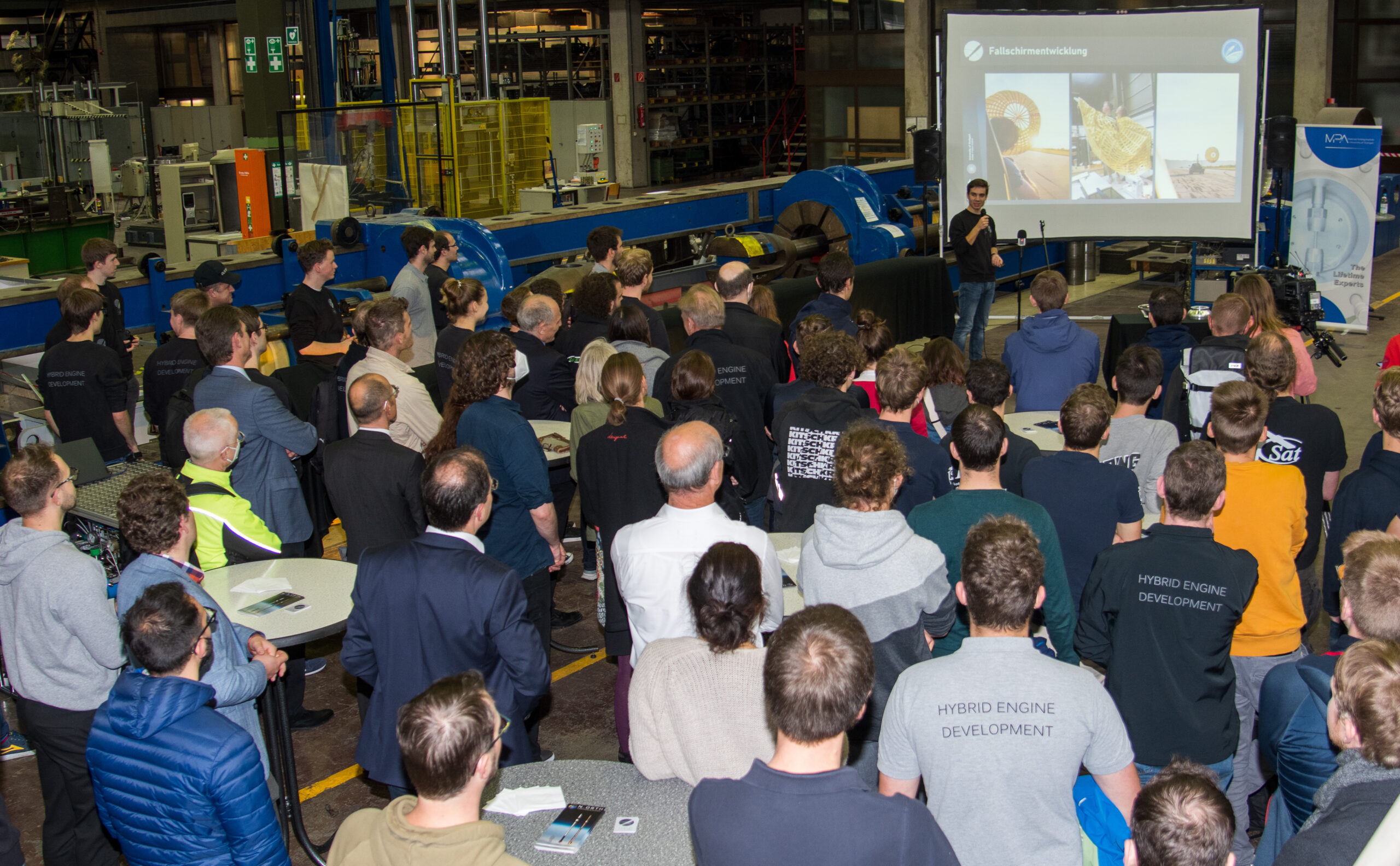
Our new rocket N2ORTH was unveiled for the first time at an event at the Materialpruefungsanstalt (MPA) Stuttgart on Wednesday, 26th October.
In the days before, three years hard work of more than 60 students came together for the first time. The project is funded by the STERN programme of the German Aerospace Center. Thanks to its dry mass of less than 70 kg, up to 145 kg of propellant mass and the efficient propulsion system, N2ORTH is HyEnD’s most powerful rocket. We are proud to announce that N2ORTH is also technologically capable of reaching the frontier of space, the Kármán line. However, the targeted altitude is still subject to change and will be chosen in accordance to our trajectory simulations, safety regulations at Esrange and weather conditions. The launch of the rocket is currently planned for April 2023.

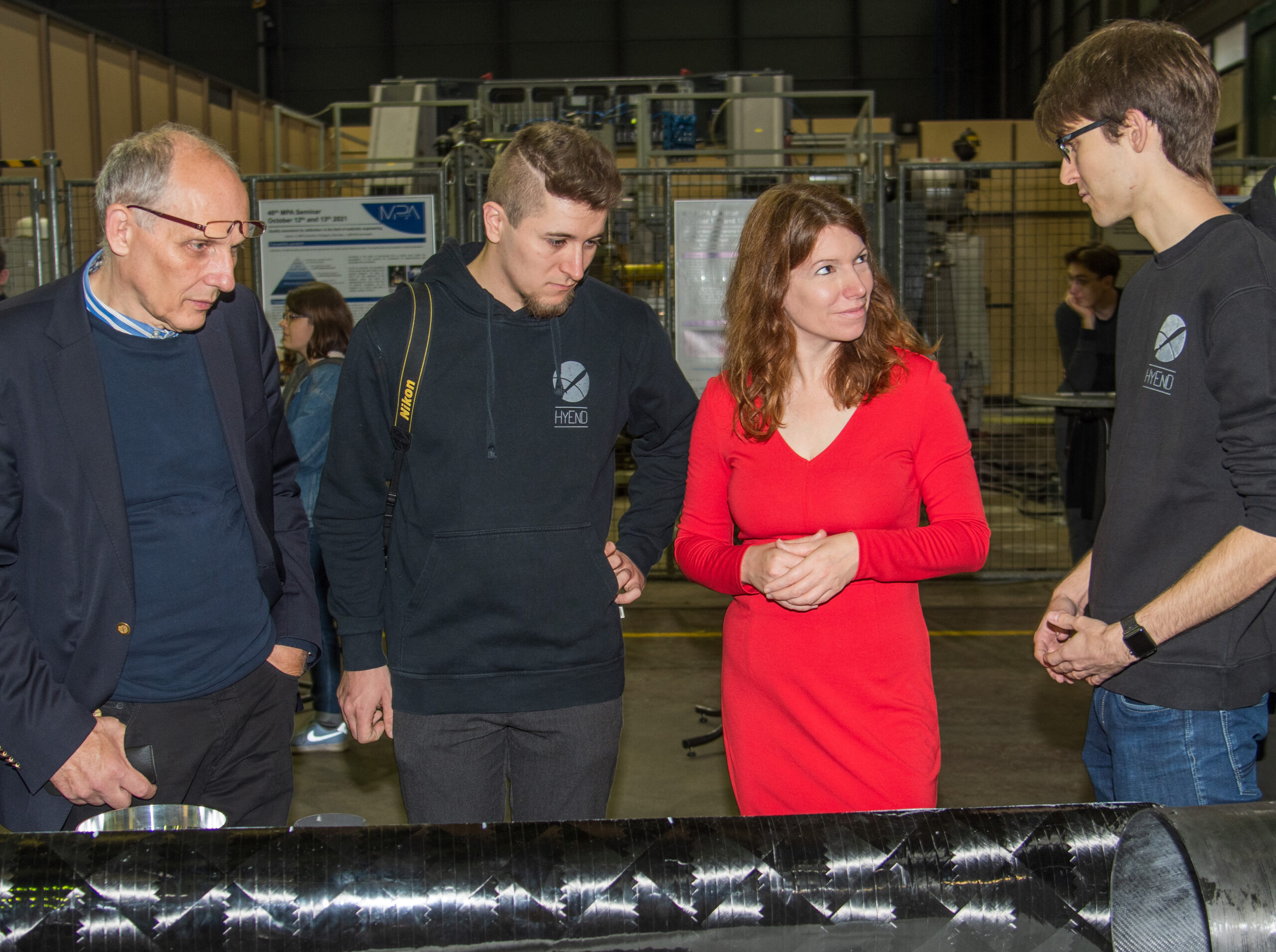
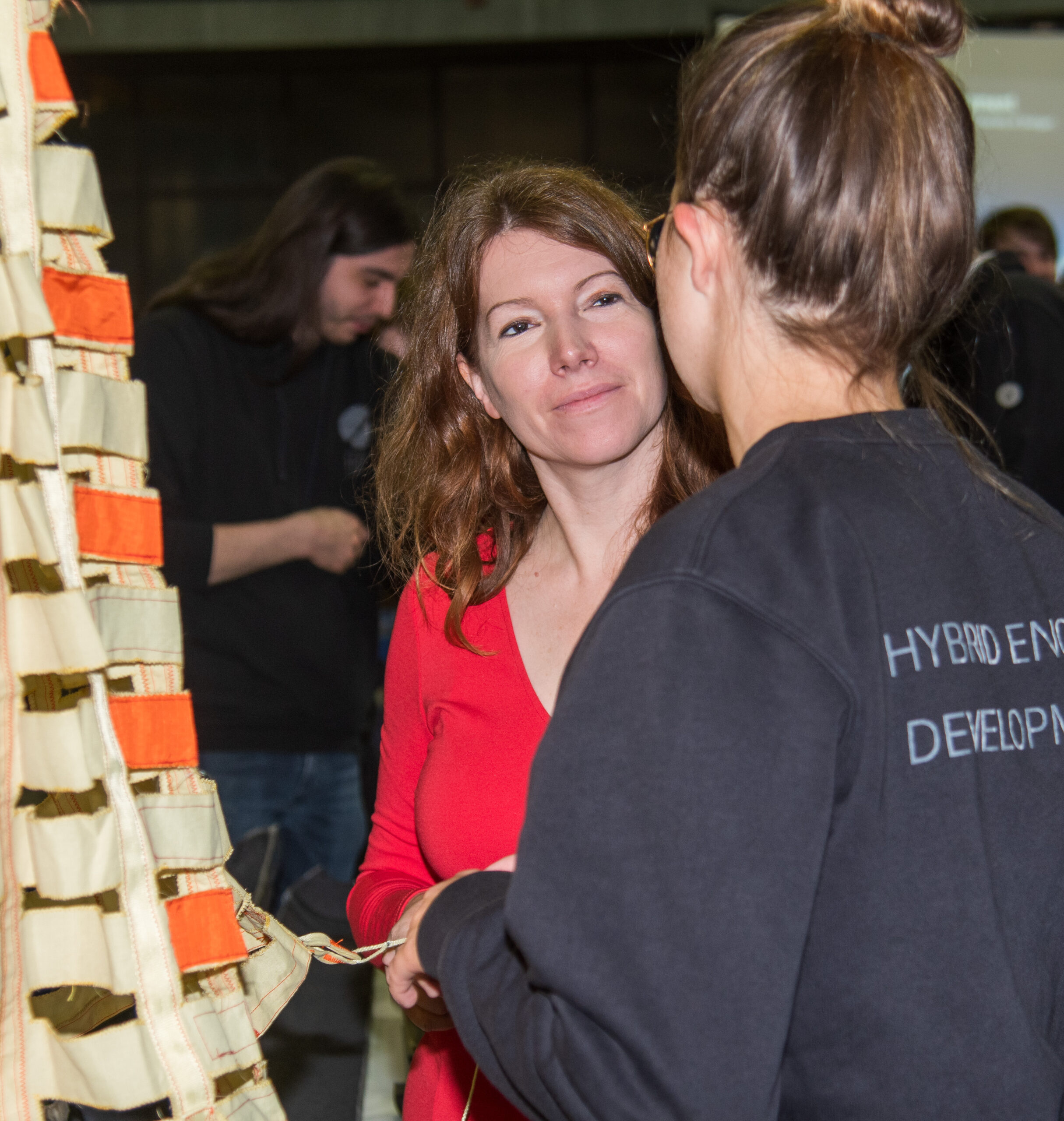
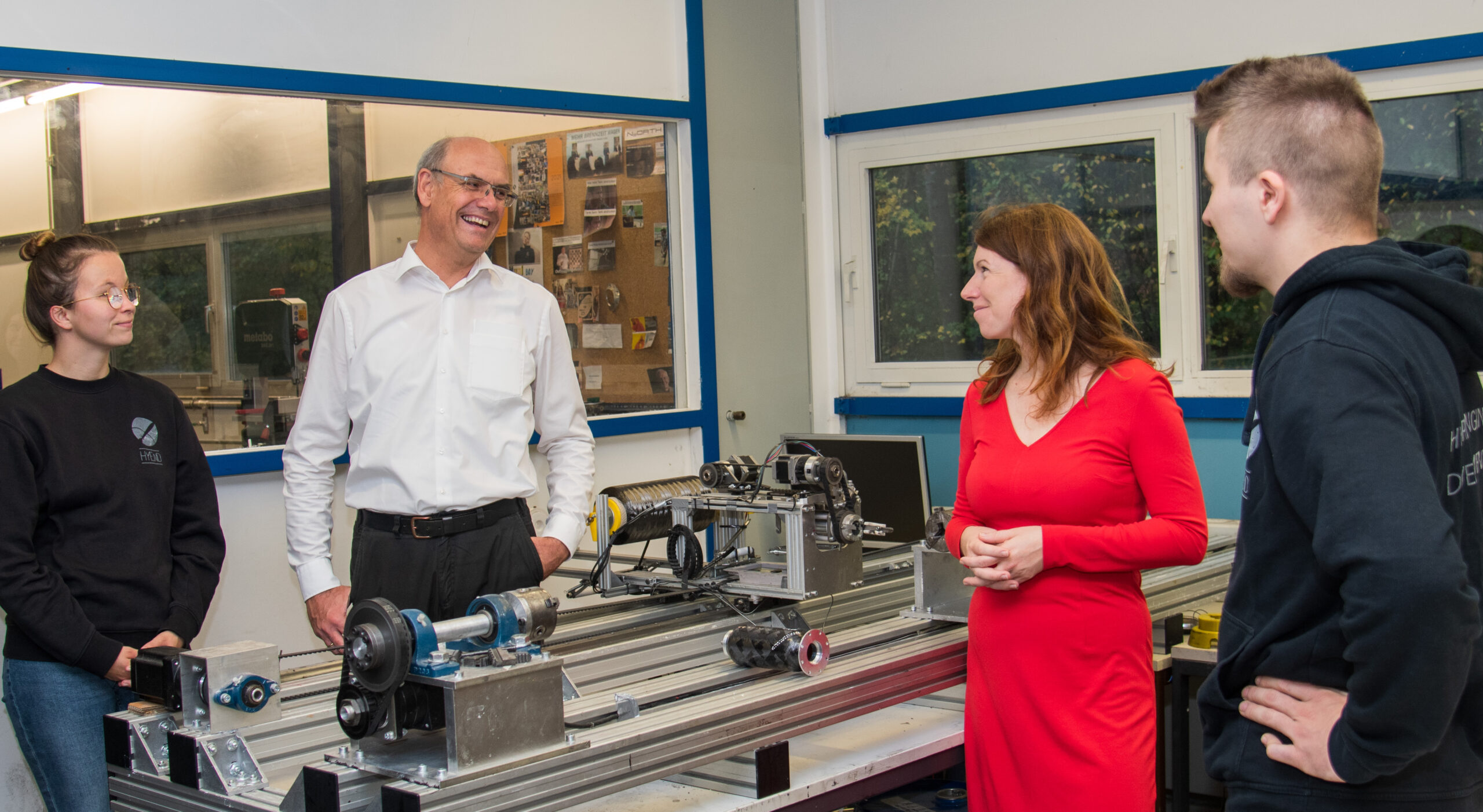
The unveil of the rocket took place in the presence of representatives of the University of Stuttgart, the German Aerospace Center and partners from industry. We especially want to thank the Coordinator for Aerospace of the German Feder Government, Dr. Anna Christmann, for her visit.

Read more about the event here:

https://www.uni-stuttgart.de/en/university/news/all/hyend-rakete/

The German press also covered the event:

https://www.stuttgarter-zeitung.de/inhalt.uni-stuttgart-studenten-bauen-ihre-eigene-rakete.c0e65696-9887-42a2-a21c-8cf17964c819.html

https://www.swr.de/swraktuell/baden-wuerttemberg/stuttgart/rakete-von-studierenden-in-stuttgart-vorgestellt-100.html

Photos: HyEnD, MPA Stuttgart
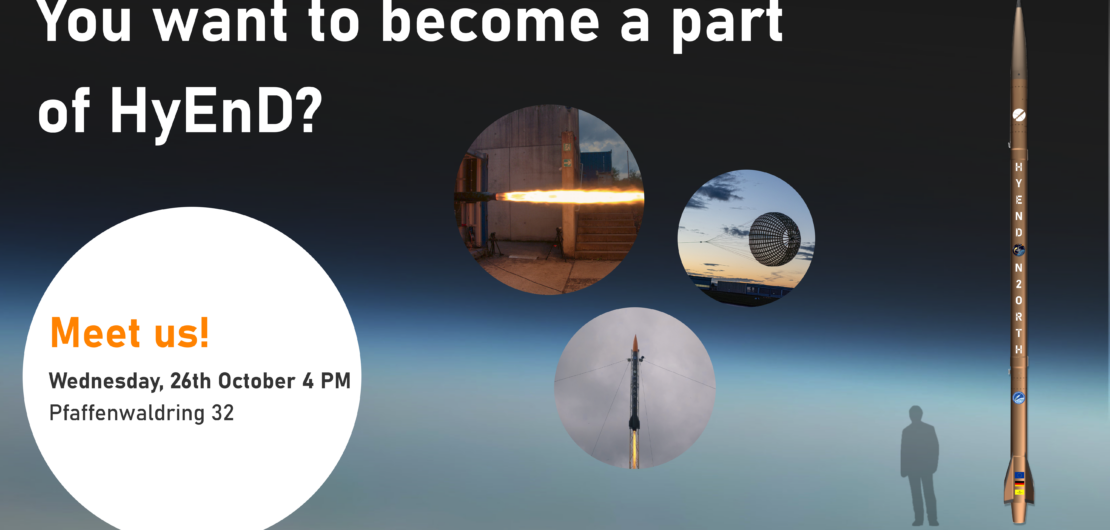
Interested to join? Meet us!

English version below

Wir, die Hochschulgruppe Hybrid Engine Development – kurz HyEnD – sucht neue Mitglieder. Im Jahr 2016 haben wir mit unserer Rakete HEROS den Höhenrekord für studentische Hybridraketen (32 km) aufgestellt. In wenigen Monaten möchten wir diesen Rekord mit unserer Rakete N2ORTH brechen. Parallel dazu beginnt JETZT die Vorbereitung für das nächste Projekt – und wir brauchen dich!

Ein paar Infos vorab:

  •  Mitmachen können Studierende der Universität Stuttgart aus ALLEN Studiengängen
  •  Ein Einstieg im ersten Semester ist ohne Problem möglich und oft sinnvoll.
  •  Vorteile: Du sammelst Erfahrung in einem technisch herausforderndem Projekt, kannst dein theoretisches Wissen aus dem Studium anwenden und bekommst erste Kontakte zu Industrie und Wirtschaft
  • Zeitaufwand: 2 Meetings pro Woche (Gesamt + Subsystem) + Zeit zur Erledigung deiner Aufgaben

Du hast Interesse?

Dann komm zu unserem Treffen für alle Interessierten und nimm Kontakt mit uns auf. Beim dem Event gibt es weitere Infos und du hast die Chance unsere Rakete N2ORTH aus nächster Nähe kennenzulernen.


We are looking for new members! In 2016, we set the altitude record for student hybrid rockets (32 km) with our rocket HEROS. In a few months we plan to break this record with our rocket N2ORTH. In parallel, the preparation for the next project starts NOW – and we need your help!

Please note:

  • You have to be a student at the University of Stuttgart. All study courses from all semesters are welcome!
  • Usually, every team member participates in two meetings per week (overall team meeting and subsystem meeting). You will need additional time to work on your tasks.
  • Meetings are usually in German.

You are interested?

Come to our meeting and contact us. At the event you will get more information and have the chance to get to know our rocket N2ORTH up close.

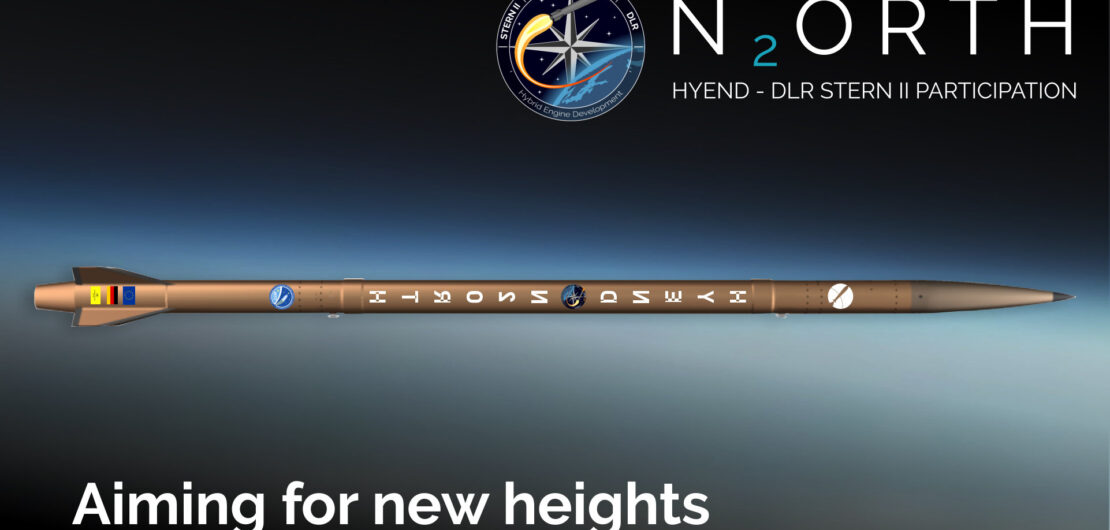
N₂ORTH – Aiming for new heights

We are happy to share a small teaser for the upcoming reveal and launch of our rocket N2ORTH! In the last three years, the team worked hard to make this rocket a reality. The rocket now is almost ready to launch, with only a few last tests and the assembly ongoing. The launch from Esrange is planned for the first half of 2023. As for the target altitude, we plan to break our own record for student-built hybrids (32.3 km) but N2ORTH is a lot more capable. The target altitude is still subject to change and will be chosen in accordance with our trajectory simulations, safety regulations at Esrange and weather conditions. Stay tuned for more details!

N₂ORTH Propulsion System Test in Blow-Down Operation

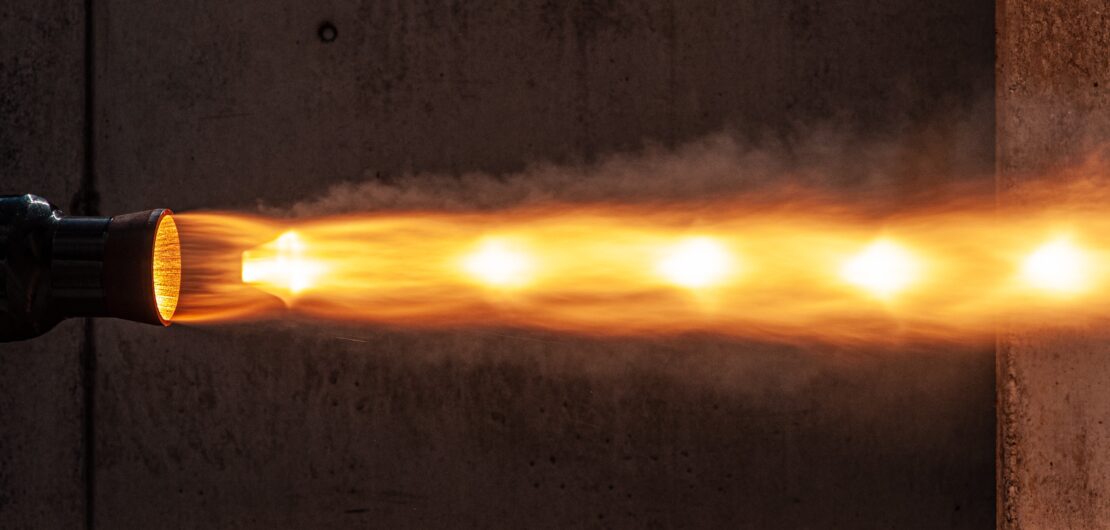
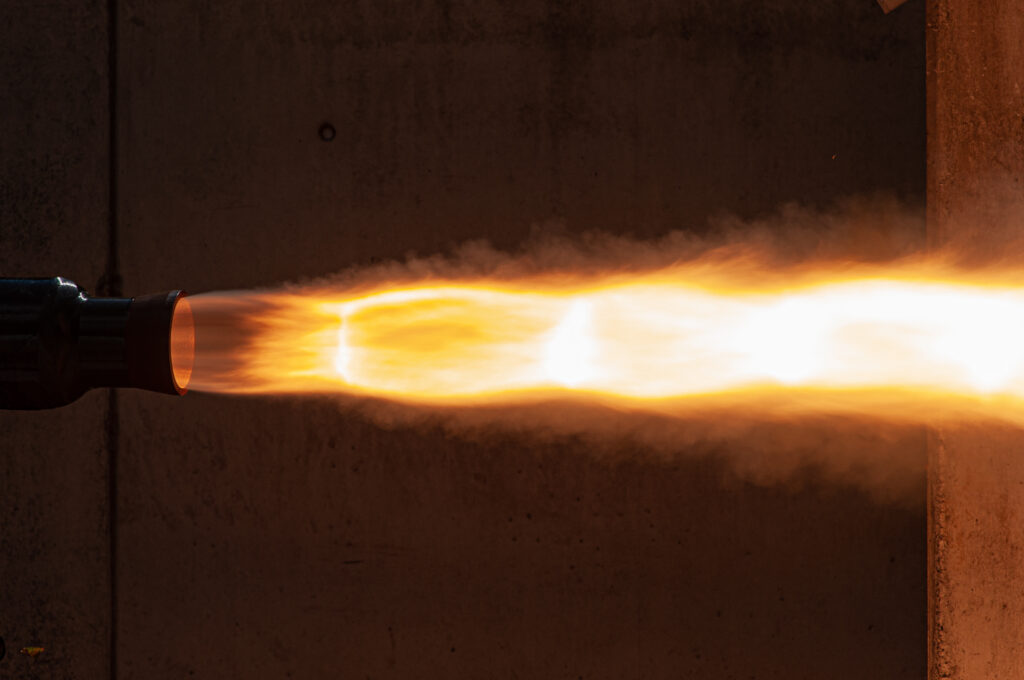
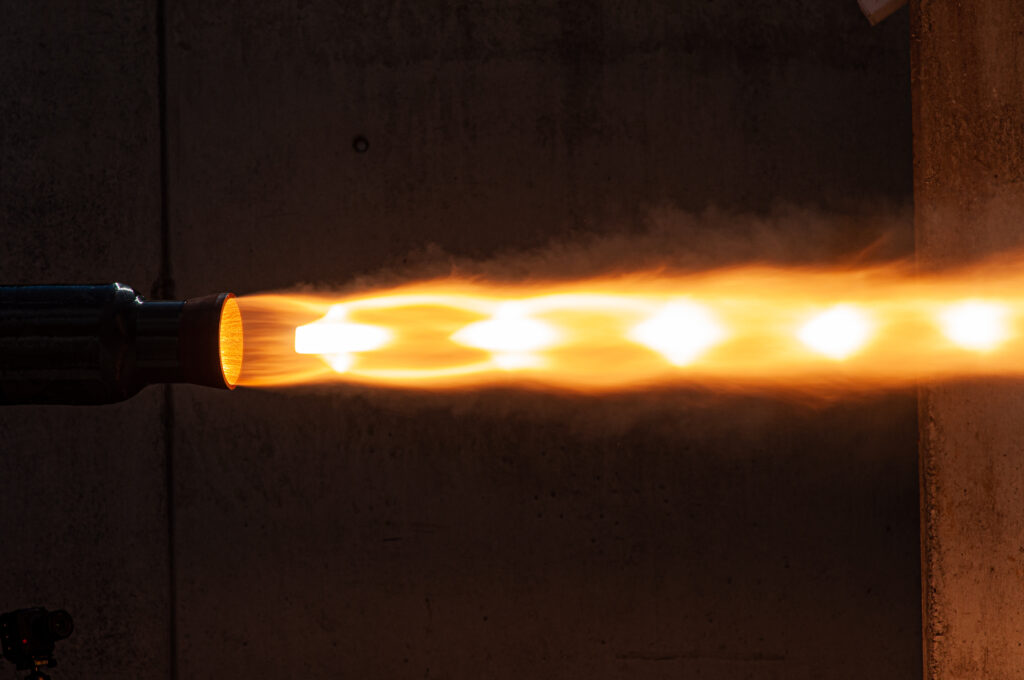
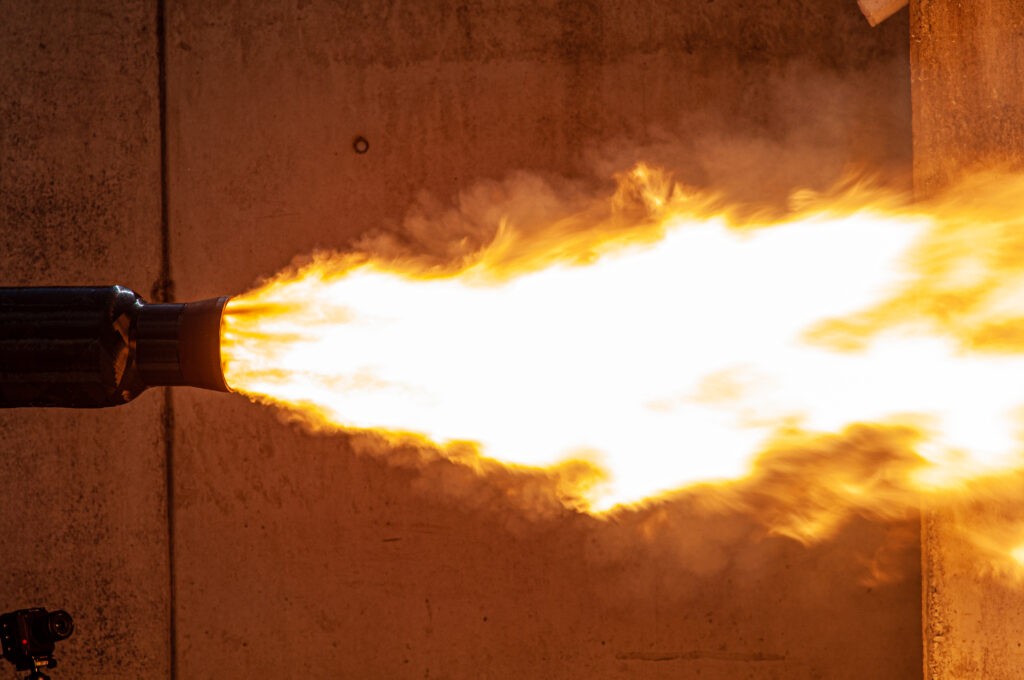
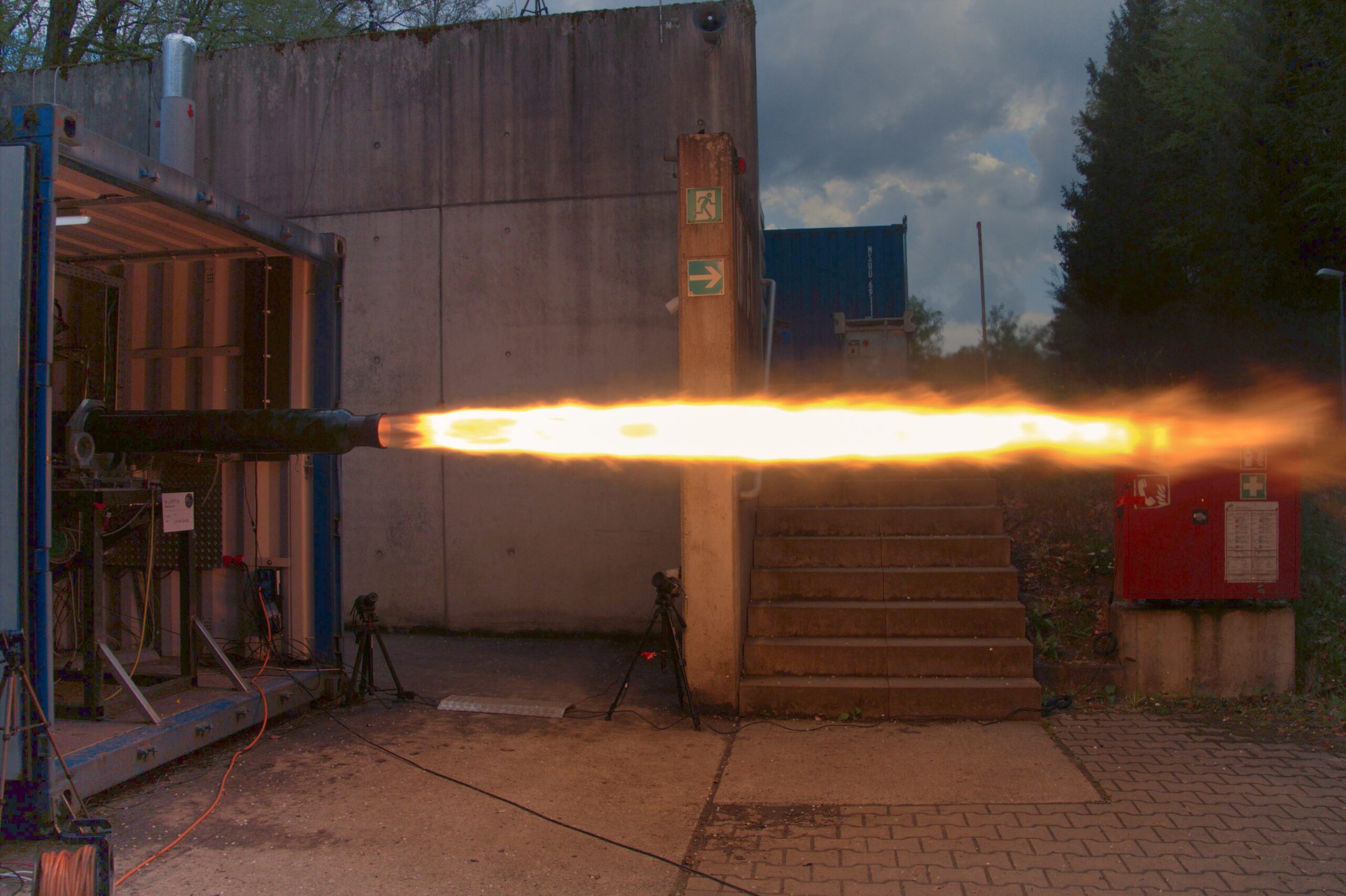
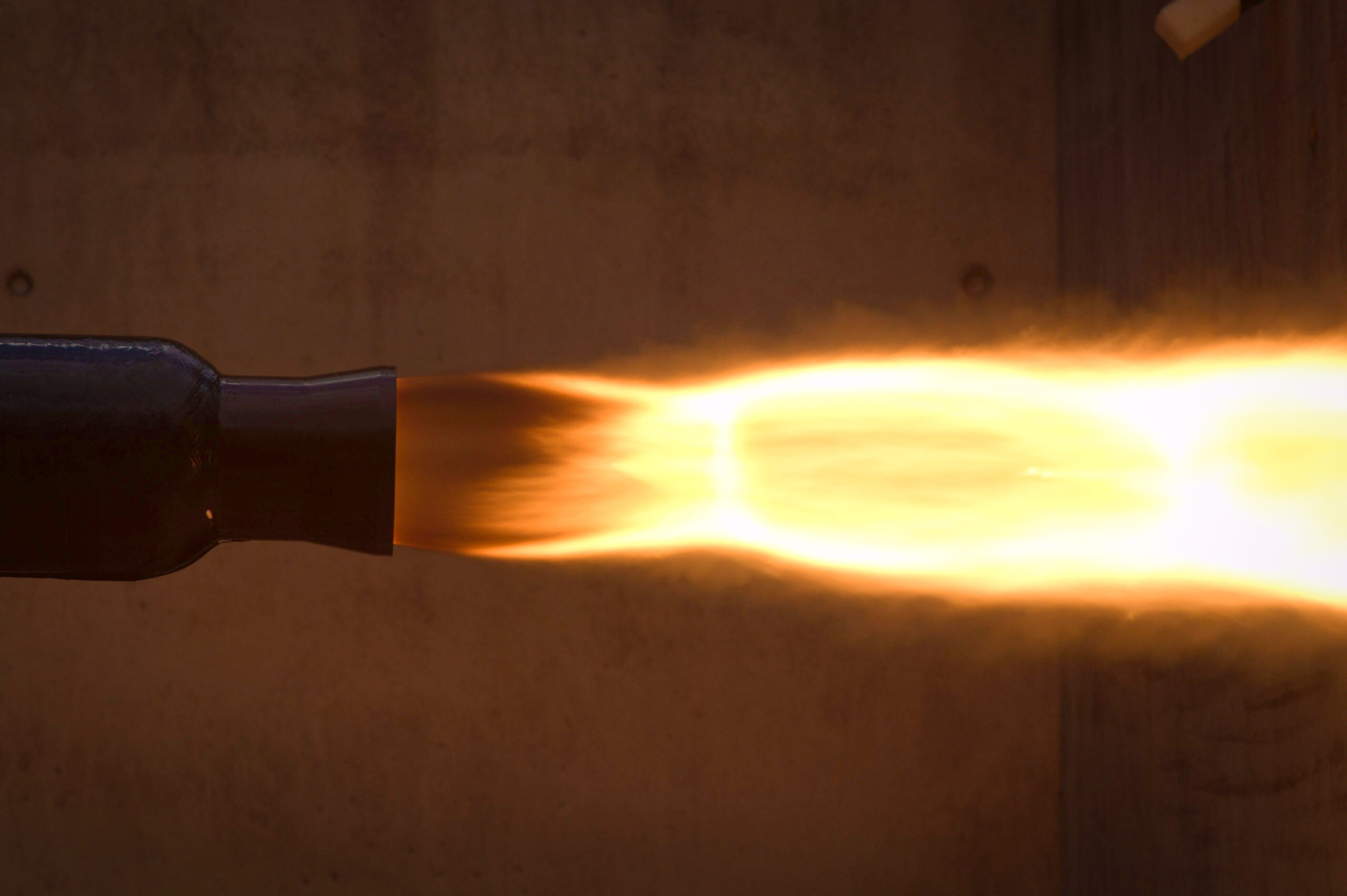
The N₂ORTH propulsion system was successfully qualified in a hot fire test for a propellant throughput of more than 100 kg on August 25th. This marks an important milestone for the project, as HyEnD now has a flight-worthy propulsion system for the launch.

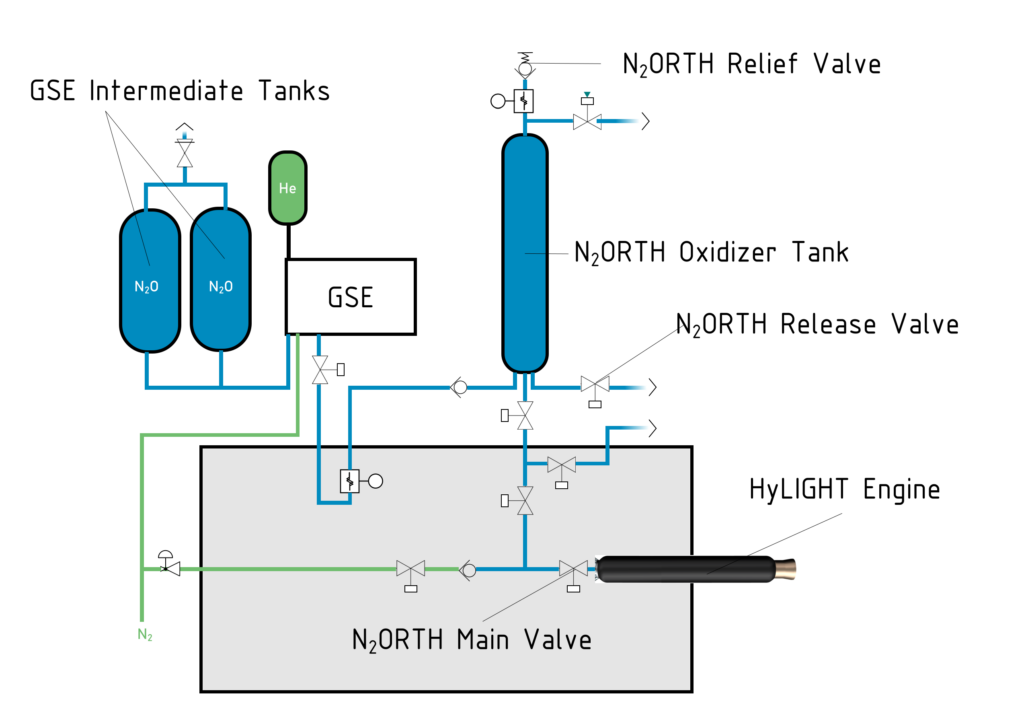
The fluid system of the ground support system (GSE) was used in order to fill the oxidizer tank with nitrous oxide and helium. The GSE includes two intermediate tanks for storage of the required amount of nitrous oxide for the filling process as well as a remote filling arm with a quick disconnect coupling.

The test setup includes the valves of the rocket as well as additional valves that are controlled using the test bench. An overview of the setup can be found below:

During the test, the rocket’s oxidizer tank was operated in a blow-down configuration together with the fluid system and engine of the rocket. The hot fire of the engine included the main operation phase of the engine and also the gas blow down after the depletion of liquid oxidizer, resulting in an overall hot fire duration of more than 50s.

In the upcoming weeks, the team will prepare another test with increased propellant mass in order to unlock the full potential of N2ORTH.

Recovery Tests at IFT

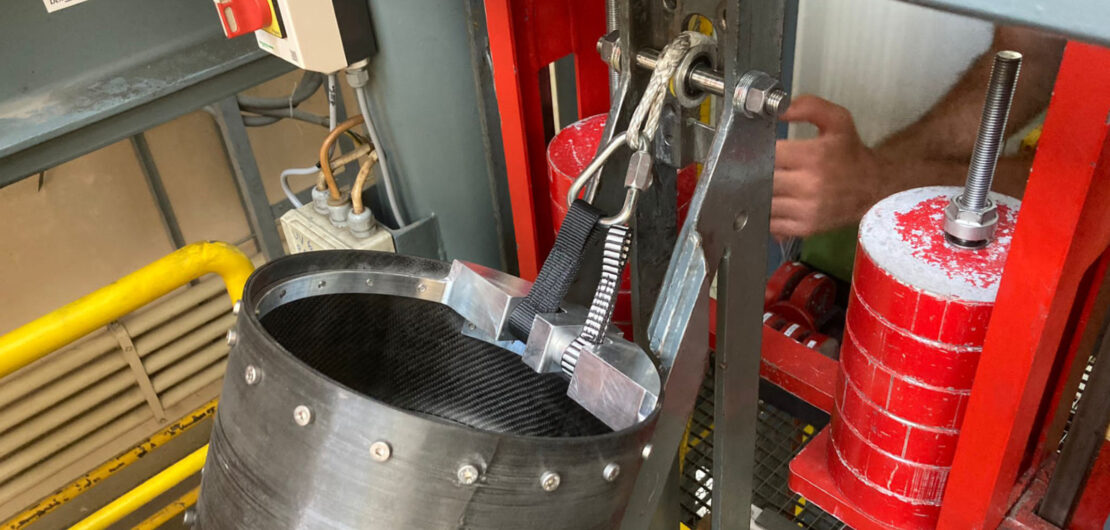
As the launch of N2ORTH is getting closer, last validation tests of the recovery system are performed before final assembly. In mid-July a drop test was performed to verify the mechanical integrity of several recovery components.
The experimental setup is based on a drop test bench where a drop weight can be lifted up to 7m. At the end of the fall length, an impact plate transmits the energy of the falling weight into the connected recovery components. By applying a dynamic load equal to the opening shocks during main chute deployment, the recovery mount to the rocket’s hull structure was tested. All components withstood the required design loads over several load cycles without substantial damage.
Furthermore, the modification of the shock absorber was determined by these tests.
We want to thank the Institute of Mechanical Handling and Logistics for the technical support with the drop test bench.

N₂ORTH Integration and Alignment Process

HyEnD has started the integration process of its N2ORTH rocket for the launch in Esrange later this year. One of the most crucial aspects of the rocket assembly is to ensure precise alignment of the components. Every slight deviation can have an influence on the flight trajectory and has to be considered in the mission analysis.

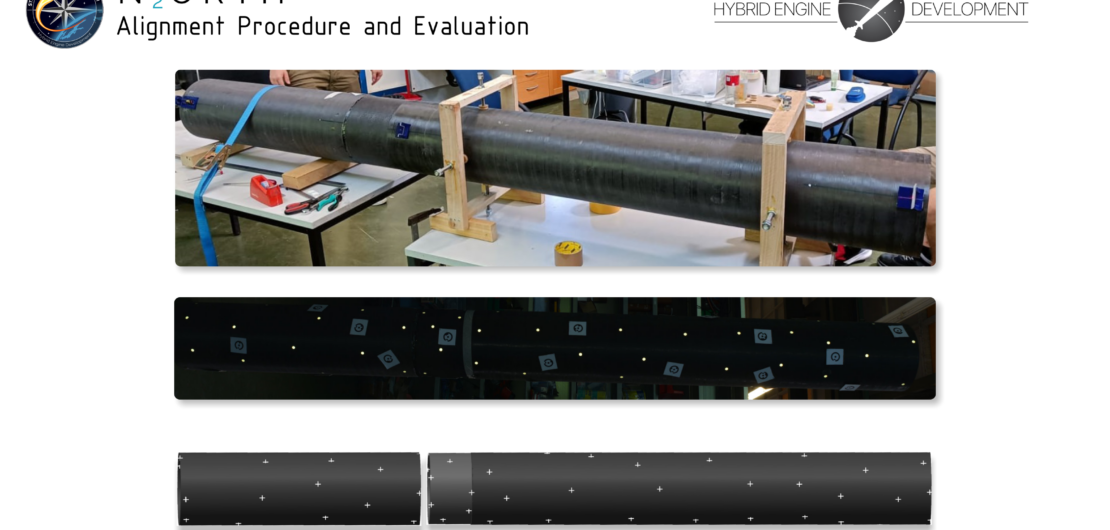
We achieve alignment by using a laser beam and photogrammetric measurements: First, the laser beam is aimed over a notch in order to align it with the tank axis, which was determined in a previous process. For the next step, the tube connector is inserted partially into a segment of rocket structure. Two targets are placed onto the structure segment aligned with its axis. The targets consist of grids perpendicular to said axis. After that, the structure segment can be aligned to the tank axis. Alignment is achieved when the laser beam intersects the two grids at the same point. Next, the tube connector is connected to the tank with a small amount of epoxy.

In order to evaluate the alignment, photogrammetry is used. This method generates point clouds to which cylinders can be fitted using CAD software. The offset and angle between the different parts then can be analyzed. Different plausibility checks are performed in order to ensure that the obtained measurements are viable.

Compass Rocket Paper now Available

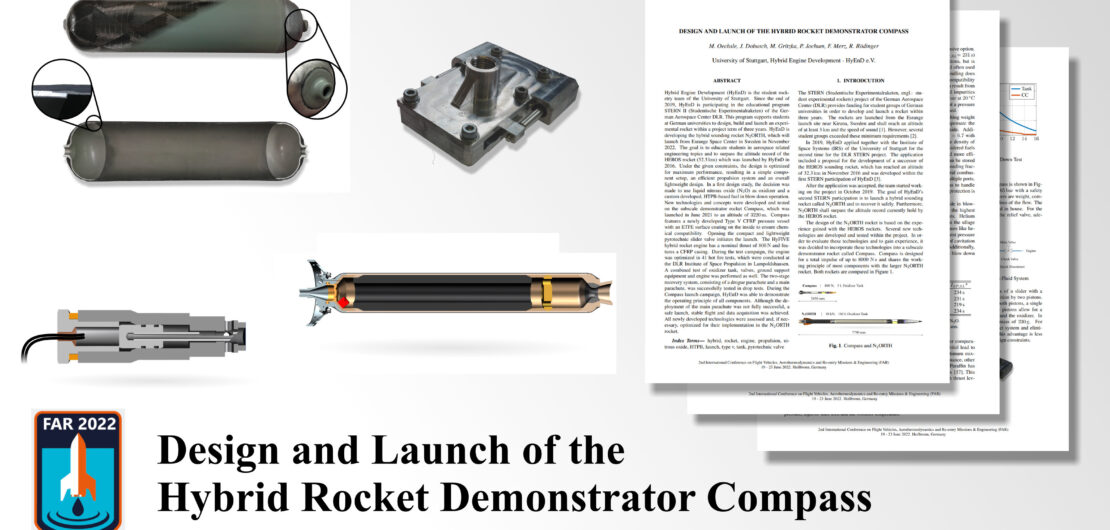
In June, HyEnD had the honor to present a paper at the 2nd International Conference on Flight Vehicles, Aerothermodynamics and Re-entry Missions & Engineering (FAR 2022) in Heilbronn. The paper discusses the overall design and key technologies of our demonstrator rocket Compass. Insights in the design of the oxidizer tank, hybrid engine, pyrotechnical valves, recovery system and avionics are given. The paper is now available on ResearchGate.

HyLIGHT Engine Tested at Elevated Thrust Levels

Great news from the propulsion team. After the engine was tested successfully for a total impulse of 267 kNs in March at the 10kN thrust level, HyEnD encountered problems regarding combustion instability and high frequency oscillations at elevated thrust levels. 
As the rocket is operated in blow-down mode, the thrust continuously decreases during operation. Elevated initial thrust levels are necessary in order to ensure a sufficient initial acceleration when the rocket still contains its maximum propellant load.
After multiple short duration test firings in June and July, the design of the engine was optimized and now allows for stable, smooth, and efficient operation at thrust levels of up to 15kN. At 40 bar chamber pressure, a specific impulse of more than 230s was achieved. In the upcoming weeks, the entire propulsion system will go through final testing as the launch is getting closer and closer.

Flight version of drogue parachute tested

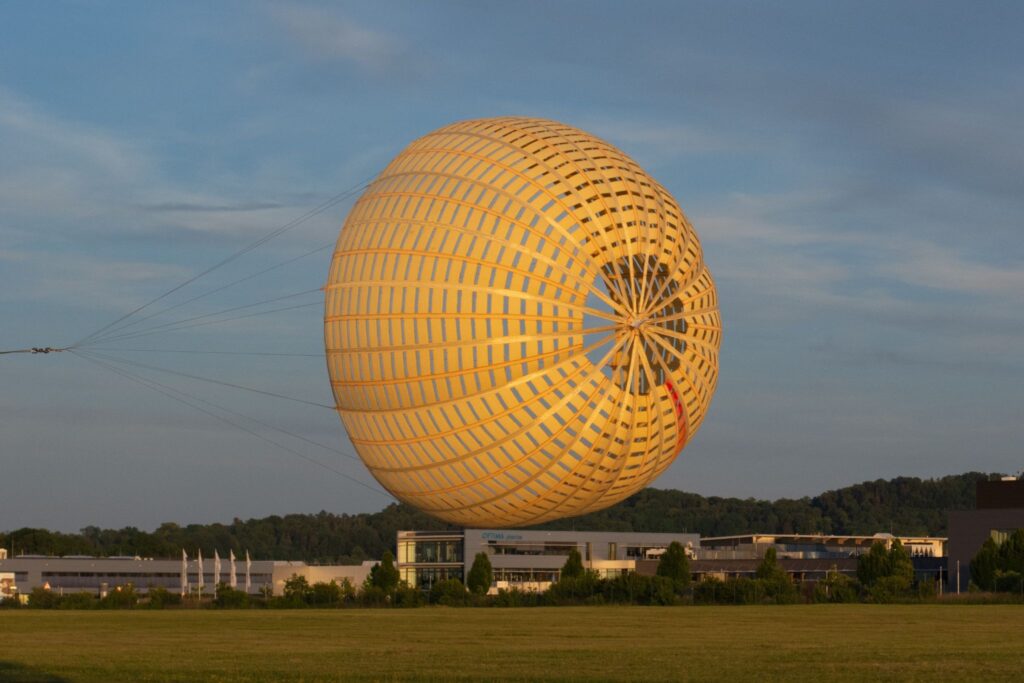
Great news from our supersonic drogue parachute! After evaluating the first test of our supersonic ribbon parachute, we not only improved the shape and design, but also the manufacturing and testing process. Three months later, we were finally able to test the flight version of the self-sewn parachute at Würth Airport in Schwäbisch Hall. We are now looking forward to testing the entire sequence of the recovery system.bWe would like to take this opportunity to thank Adolf Würth Airport GmbH for the use of the runway and the AMANN Group for providing the sewing yarns.

N2ORTH Oxidizer Tank Successfully Tested

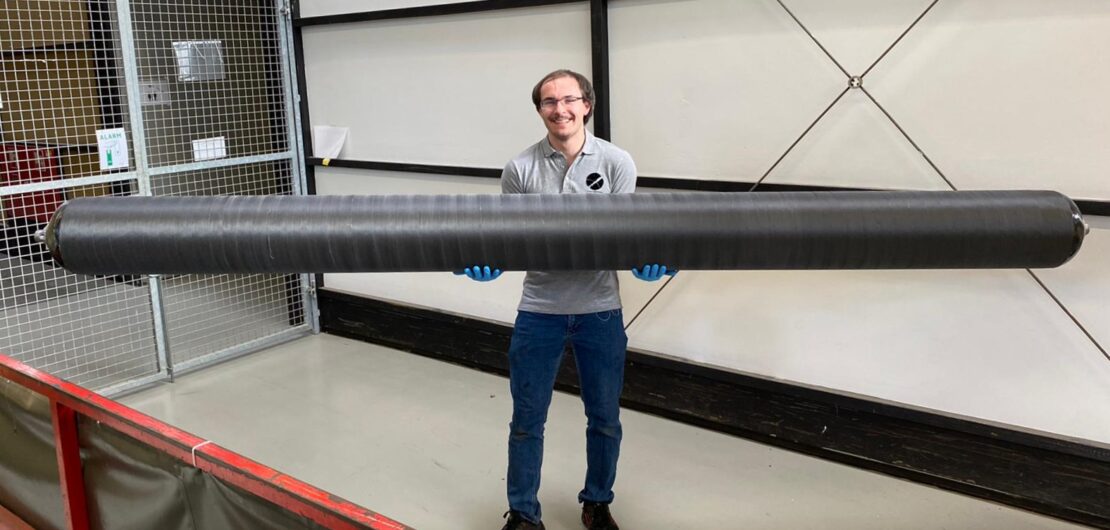
Last week, we successfully tested the oxidizer tank of the N2ORTH rocket for the first time. The tank is a type V pressure vessel, which features a thin fluoropolymer surface coating on the inside to ensure nitrous oxide compatibility. The empty mass of the tank is only 16.8 Kg with a volume of 160 l and a nominal operating pressure of 75 bar. We are very satisfied with the result and are excited to see the behavior in the blow-down test.